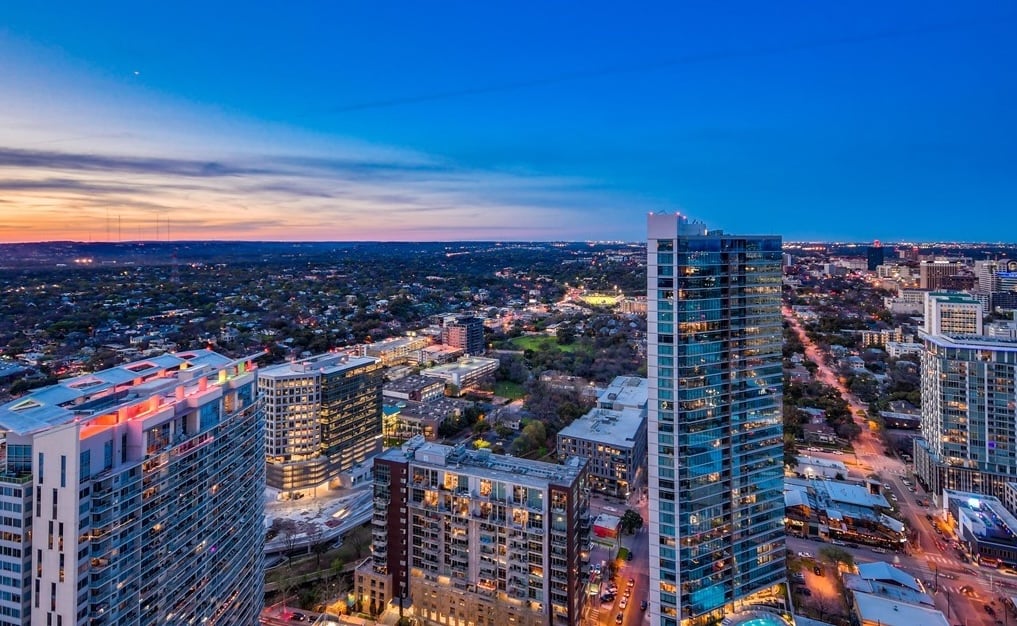
If you want central Austin living where your morning coffee, a shady greenbelt, and a front‑porch bungalow are all a short stroll away, Travis Heights deserves a close look. You may be weighing lifestyle, commute, and character, and trying to see how it all fits together. In this guide, you’ll get a clear picture of location, history, architecture, parks and dining, mobility, schools, and a dated market snapshot, plus practical tips for touring homes. Let’s dive in.
Location and boundaries
Travis Heights sits just south of downtown Austin. The commonly cited boundaries are Lady Bird Lake to the north, Interstate 35 to the east, South Congress Avenue to the west, and Oltorf Street to the south. These lines match the Travis Heights–Fairview Park area that is listed on the National Register of Historic Places as a historic district. You can review the official nomination for detailed history and maps in the National Park Service record for the Travis Heights–Fairview Park Historic District.
Why this matters day to day: living here puts SoCo’s dining and retail at your doorstep, and the Ann and Roy Butler Hike‑and‑Bike Trail around Lady Bird Lake within easy reach. The city’s Urban Trails Plan highlights this trail network and its role in daily recreation and connections across the urban core.
History and preservation
Travis Heights was platted and built largely in the early 20th century, with significant growth in the 1920s and 1930s. The winding streets, large canopy trees, and parkland reflect early garden‑suburb ideas. The district’s architecture and development story are documented in the National Register nomination.
The neighborhood is a National Register historic district, listed in 2021. That federal recognition documents significance, but local historic zoning is what creates design review requirements. Parts of Travis Heights have local standards, and many projects over the years have appeared before Austin’s Historic Landmark Commission. If remodeling is part of your plan, verify whether a specific property sits within a local historic district or has a landmark overlay before you set timelines.
Architecture you notice on a walk
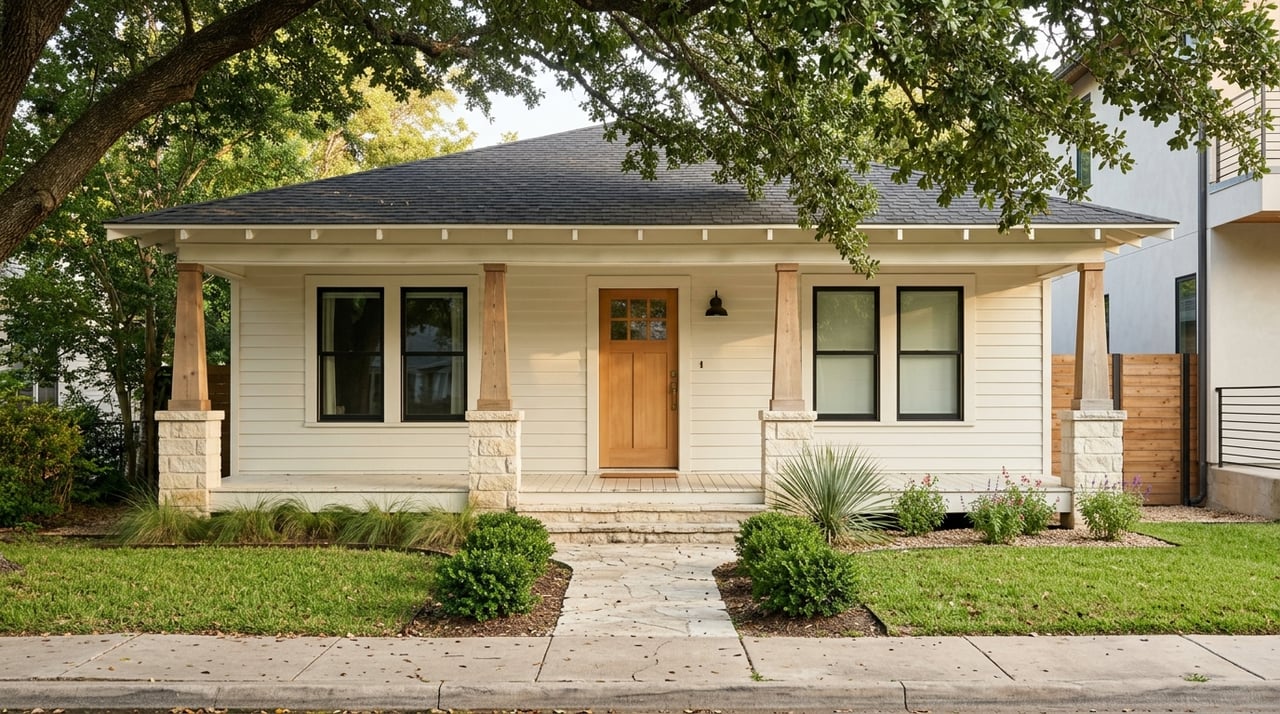
You will see a rich mix of early‑ and mid‑century houses. The single most common historic type is the Craftsman bungalow with deep porches, low gables, exposed rafter tails, and wood or shingle siding. You will also find Folk Victorian and Queen Anne survivors, Neoclassical and Colonial Revival, Period Revival styles like Tudor and Spanish, Minimal Traditional homes from the mid‑century years, and a scattering of mid‑century modern cottages. The National Register documentation catalogs these styles and explains how they fit together across the district.
Recent years have brought boutique infill and second‑story additions. Design compatibility is an active conversation in Travis Heights, and Historic Landmark Commission agendas illustrate how massing and street‑facing changes are evaluated in areas with local standards.
Parks, pools, and greenbelts
Travis Heights is unusual for how much green space sits inside the neighborhood. Little Stacy Park is a 6.7‑acre wooded park that features a historic 1929 wading pool and playground, and it connects through the Blunn Creek Greenbelt to Big Stacy Park and its spring‑fed pool. The Little Stacy history page details the park’s early amenities and how neighbors use it today.
For longer runs and skyline views, you have direct access to the Ann and Roy Butler Hike‑and‑Bike Trail and the Lady Bird Lake boardwalk. The City’s Urban Trails Plan describes this 10‑mile loop and how it serves daily riders and runners across Austin.
If you prefer a quiet creekside walk, the Blunn Creek Greenbelt trail listing outlines routes, surfaces, and connections within the neighborhood.
Cafés, restaurants, and SoCo staples
South Congress functions as Travis Heights’ living room. Popular stops include morning coffee at Jo’s, oysters and a shaded patio at Perla’s, and wine and bistro plates at June’s All Day. These spots, along with independent boutiques and galleries, shape the energy that many residents enjoy on foot.
- Grab an iced coffee at Jo’s Coffee, home of the “I love you so much” mural.
- Book a table at Perla’s Seafood & Oyster Bar for a relaxed evening.
- Slide into a late lunch at June’s All Day, then wander the shops.
Getting around
Travis Heights is walkable to SoCo’s shops and restaurants and bikeable to downtown and the lake trail. Many residents combine walking, biking, and short drives for errands and commutes.
Capital Metro bus service runs along South Congress, with ongoing planning to improve corridor connectivity. Expect lively evenings and weekends on SoCo, and plan for limited street parking during peak times.
Quick tips:
- Use the Butler Trail for a scenic bike or jog to downtown.
- For evening dining on SoCo, consider rideshare to skip parking.
- Check route maps and timing before relying on bus transfers for tight morning schedules.
Schools and community
Travis Heights Elementary sits inside the neighborhood at 2010 Alameda Drive and is part of Austin ISD. For attendance boundaries and program details, consult the district’s Travis Heights Elementary campus page.
Community life shows up on the sidewalks and at the parks, and each fall neighbors celebrate the Travis Heights Art Trail, when local artists open studios and homes throughout the area.
Market snapshot and who buys here
As of early 2026, various data providers reported neighborhood medians in the high $800,000s to mid $900,000s. One published 12‑month median displayed around $920,000 in that period. Exact numbers vary by source, boundary, and property mix, and prices can change quickly. For current, property‑specific numbers, ask for an MLS pull tailored to your needs.
Typical price bands often look like this, with timing and inventory shaping the details:
- Entry options such as smaller condos or select townhomes sometimes appear in the mid $400,000s to $600,000s.
- Renovated bungalows commonly list from the high $700,000s into the $1 million range.
- Larger restored homes and recent new builds can reach well above $1 million.
Buyers are often creative professionals who value walkability and a unique home, as well as households that want a compact city lifestyle with nearby parks and the Butler Trail. The neighborhood appeals to people who prioritize character and location over large yards.
How it compares nearby
- Bouldin Creek: similar proximity to SoCo and the lake, with more visible small‑lot infill in places. Travis Heights has a stronger recognized historic‑district identity and pockets of larger lots.
- Zilker: anchored by Zilker Park and Barton Springs. Travis Heights feels more residential and leafy while keeping easy access to the same central amenities.
What to look for on tours
Older bungalows are special, and they reward a careful look at structure and systems. Newer builds benefit from a review of site design and street presence, especially in areas with local standards.
Bring this checklist:
- For early‑century homes: porch structure, foundation and piers, roof and flashings, crawlspace moisture, and mature tree roots near the foundation.
- For infill and additions: compatibility with setbacks, scale visible from the street, and any historic‑review triggers. The Historic Landmark Commission agenda archive shows how design and compatibility come up in real cases.
A day in Travis Heights
- Morning: stroll to Jo’s Coffee and enjoy the SoCo vibe.
- Midday: jog or bike the Butler Trail along Lady Bird Lake from a nearby trail access.
- Afternoon: cool off at Little Stacy’s shaded playground or Big Stacy’s pool, and wander the Blunn Creek Greenbelt trail.
- Evening: meet friends on South Congress for seafood at Perla’s or bistro plates at June’s All Day.
Ready to see if Travis Heights is a fit for your next chapter? For a private, data‑driven consultation and a current MLS market review tailored to you, connect with Robin Banister.
FAQs
Is Travis Heights close to South Congress and the lake?
- Yes. The neighborhood sits directly east of South Congress and just south of Lady Bird Lake, with easy access to the Ann and Roy Butler Hike‑and‑Bike Trail described in the City’s Urban Trails Plan.
What does the historic designation mean if I remodel?
- The area is a National Register historic district, which documents significance. Only properties within local historic zoning or with landmark status require formal design review, so confirm zoning before setting plans.
What parks and pools are inside the neighborhood?
- Little Stacy Park with its historic 1929 wading pool connects via the Blunn Creek Greenbelt to Big Stacy Park and its spring‑fed pool, offering shade, play areas, and swim options without leaving the neighborhood.
How are transit and parking around SoCo?
- South Congress has regular Capital Metro bus service, and many residents bike or walk for short trips. Evenings and weekends are busy, and street parking can be limited.
Which elementary school serves the area?
- Travis Heights Elementary is located within the neighborhood. Always verify attendance zones and programs with Austin ISD’s campus page for the most current information.
Where can I learn more about design review examples?
- Austin’s Historic Landmark Commission maintains public agendas and case materials that include Travis Heights projects, which help illustrate how compatibility and street‑facing changes are reviewed.